All published articles of this journal are available on ScienceDirect.

Car Purchase Intention: A Systematic Literature Review
 Jackeline Valencia5
Paula Andrea Rodríguez-Correa4
Jackeline Valencia5
Paula Andrea Rodríguez-Correa4
Authors Info & Affiliations
Abstract
Introduction
The study of car adoption examines the processes and determinants that shape individuals’ decisions to purchase vehicles. These decisions result from a complex interaction between personal characteristics and contextual factors, including technological, social, and environmental considerations. Although academic interest in this topic has increased substantially, the literature remains fragmented, revealing theoretical and empirical gaps that limit a comprehensive understanding of car purchase behavior.
Methods
A systematic literature review was conducted in accordance with the PRISMA 2020 guidelines. The search strategy was applied to the Scopus and Web of Science databases, focusing on peer-reviewed empirical studies addressing vehicle purchase and adoption decisions. Eligible studies were screened, assessed, and analyzed using descriptive and thematic synthesis techniques.
Results
The findings indicate that questionnaires and surveys are the predominant data collection instruments. The highest research output originates from the United States, China, and India. The most frequently analyzed populations include car buyers, electric vehicle consumers, drivers, and university students. The most commonly employed theoretical frameworks are the Theory of Planned Behavior, the Technology Acceptance Model, and the Protection Motivation Theory. Key variables repeatedly examined include car purchase intention, age, perceived behavioral control, attitudes, and social norms.
Discussion
The results reveal a strong concentration on a limited set of theories and variables, suggesting a need to expand analytical perspectives. This theoretical convergence may limit the explanatory power of existing models and overlook emerging factors such as sustainability concerns, technological transitions, and market-level heterogeneity.
Conclusion
This review highlights the need to adopt more integrative and diverse theoretical approaches to advance understanding of car adoption. Future research should incorporate broader conceptual frameworks and contextual variables to better capture the complexity of vehicle purchase decisions.
1. INTRODUCTION
The field of car adoption is continuously evolving, focusing on the processes and factors that influence consumer decisions to purchase a vehicle. This phenomenon is central to understanding how individuals adopt different types of cars, including conventional models as well as hybrid and electric vehicles. Research in this area encompasses multiple dimensions, including the psychological motivations behind purchase decisions, attitudes toward sustainability, and socioeconomic factors that shape consumer choices [1, 2]. Recent studies indicate that electric vehicles represent not only an alternative to reduce dependence on fossil fuels but also a response to broader environmental concerns, with accelerated adoption research over the past decade [3].
Available evidence shows that a combination of individual and contextual factors influences car purchase decisions. For example, Kemal et al. [4] emphasize the importance of environmental attitudes and sustainable behaviors in the car purchase process, demonstrating that consumers in the United Kingdom increasingly consider environmental aspects when buying a vehicle. Moreover, the COVID-19 pandemic has significantly affected prospective car purchases, reshaping consumer priorities and perceptions regarding mobility and sustainability [5].
The literature suggests that automobile adoption depends on various factors, including purchase intention, age, perceived behavioral control, attitudes, social norms, education, and gender. These determinants provide a comprehensive perspective on consumer decision-making in vehicle acquisition, helping clarify adoption patterns and the factors shaping them. Consequently, the study of automobile adoption offers insights into consumer behavior and presents opportunities to improve marketing strategies and public policies that encourage the transition to sustainable, energy-efficient automotive technologies.
The adoption of cars is particularly relevant in the context of transportation and sustainability policies. Research shows that the purchase of electric vehicles has become a crucial area of study due to its economic and environmental implications. Consumers face complex decisions influenced by a range of variables, from personal attitudes to financial considerations. Sobiech-Grabka, Stankowska, and Jerzak [6] report that in Poland, the intention to purchase an electric car is influenced by both sustainability-oriented attitudes and economic factors, highlighting the interaction between environmental and financial motivations.
Furthermore, the cost of electric vehicles and perceptions of incentives are pivotal elements in the decision-making process. Belgiawan et al. [7] identify the initial cost of electric cars as a significant determinant of consumer choices in Europe, suggesting that perceptions of economic incentives can positively affect purchase intention. This finding underscores the need for public policies that address economic barriers to adopting cleaner transportation technologies. In Brazil, studies reveal that environmental and psychological factors, combined with economic considerations, strongly influence consumer intentions to adopt electric vehicles, highlighting both opportunities and challenges in emerging markets [8].
The rise of new mobility models, such as car-sharing, also influences vehicle purchase decisions. Further research [9] demonstrates that using car-sharing services in Hangzhou, China, affects consumers’ willingness to delay purchasing their own vehicle. This suggests that the availability of alternative mobility options can significantly shape consumer perceptions and behaviors, offering new insights into automotive market dynamics.
Taken together, these studies highlight the need for a comprehensive understanding of the factors that influence personal vehicle adoption. These include economic factors, attitudinal aspects, and the emergence of new mobility patterns. A holistic approach to analyzing these determinants will support the development of more effective strategies to promote sustainable automotive technologies and facilitate the transition to greener transportation systems.
Despite growing interest in car adoption, significant research gaps remain, warranting a systematic literature review. Existing studies have examined various determinants of purchase intention, including brand influence [10] and peer effects [11], but few have integrated these variables into a unified theoretical framework. For instance, the influence of satisfaction and regret on car purchase behavior has not been fully explored across diverse cultural and economic contexts, particularly in developing countries [12]. Additionally, research on the positive and negative consequences of purchasing an electric vehicle (EV) on subsequent driving behavior reveals persistent gaps that warrant further investigation [13].
This systematic review aims to address these gaps by synthesizing existing findings into a unified theoretical framework. This synthesis will enable a deeper understanding of the factors influencing automobile adoption and help identify recurring patterns and significant variations across different contexts. This endeavor is crucial for developing more effective strategies to encourage the adoption of automotive technologies, particularly in an era of rapidly changing attitudes toward sustainability and economic uncertainty.
To guide the systematic review and align the analysis with the study’s objectives, the following research questions were formulated:
RQ1. What are the main data collection instruments used in empirical studies on car adoption and purchase intention?
RQ2. In which geographical contexts and population segments has car adoption been investigated, and what regional or demographic patterns have been reported?
RQ3. Which psych behavioral theories and theoretical models have been employed to explain car purchase intention and car adoption, including hybrid and electric vehicles?
RQ4. What are the most frequently examined latent variables in studies on car adoption, and how are these variables related to purchase intention?
RQ5. What research gaps, geographical, theoretical, and variable-related, persist in the field of car adoption, and how can they inform future research agendas?
2. METHODOLOGY
This research is exploratory in nature and is based on secondary sources. A systematic review of the literature on car adoption was conducted in accordance with the PRISMA 2020 guidelines [14]. This methodological approach enables a comprehensive and rigorous assessment of existing studies, ensuring transparency and reproducibility.
2.1. Eligibility Criteria
The inclusion criteria in this study were defined based on article titles containing key terms such as “adoption” and “cars” within the main metadata. To refine the records, three exclusion phases were implemented. In the first phase, records with erroneous indexing were discarded. In the second phase, documents without full-text access were excluded, which applied only to systematic literature reviews that analyze metadata. Finally, in the third phase, conference proceedings without full-text access and articles lacking a theoretical or empirical model were eliminated.
2.2. Source of Information
The Scopus and Web of Science databases were selected as the primary sources of information for this systematic review. These platforms are widely recognized for their comprehensive coverage and rigorous indexing of high-impact scientific journals. As noted by Mongeon and Paul-Hus [1], the two databases offer complementary coverage of the scientific literature, ensuring both exhaustiveness and relevance in systematic reviews.
The choice of Scopus and Web of Science was based on their broad coverage and rigorous indexing standards, which guarantee the quality and scientific relevance of the publications included. These databases are internationally recognized as leading sources for systematic reviews in the social sciences and applied fields, ensuring access to high-impact journals and diverse geographic contexts. Their use reduces the risk of bias from non-indexed or low-quality sources and provides a solid foundation for the validity and reliability of the review.
2.3. Search Strategy
To conduct the search in the two selected databases, two search equations were devised, tailored to the pre-established inclusion criteria and the specific search characteristics of each platform. These equations enabled a precise and comprehensive identification of literature pertinent to the study. Methodological innovations, such as integrating multicriteria decision-making tools, such as AHP and TOPSIS,nto systematic reviews, have proven useful for ranking and interpreting electric vehicle studies [2]. The search equations were implemented on 18 August 2024, ensuring the validity and relevance of the results obtained in the subsequent analysis.
For the Scopus database: ((TITLE (intention OR tpb OR “Theory of planned behav*” OR factors) AND TITLE (“car purchase” OR “buying a car” OR “vehicle purchase” OR “automobile purchase”)) OR (TITLE-ABS-KEY (intention OR tpb OR “Theory of planned behav*” OR factors) AND TITLE (“car purchase” OR “buying a car” OR “vehicle purchase” OR “automobile purchase”)))
For the Web of Science database: ((TI= (intention OR tpb OR “Theory of planned behav*” OR factors) AND TI=(“car purchase” OR “buying a car” OR “vehicle purchase” OR “automobile purchase”)) OR (TS=(intention OR tpb OR “Theory of planned behav*” OR factors) AND TI=(“car purchase” OR “buying a car” OR “vehicle purchase” OR “automobile purchase”)))
The temporal scope of the review was set to August 2024, ensuring that the analysis included the most recent studies available while maintaining a manageable body of literature for systematic synthesis. This period was selected because the adoption of electric and hybrid vehicles has accelerated significantly in recent years, driven by technological advances, environmental policy developments, and post-pandemic mobility trends. Restricting the search to this time frame provides a more accurate picture of the current state of research and captures the most relevant evidence for understanding the dynamics of car purchase intention.
2.4. Data Management
Microsoft Excel® was used to extract, store, and process information retrieved from each database. This tool enabled systematic data organization and facilitated efficient record management throughout the review. Each identified article was analyzed individually through a full-text examination to ensure the quality, relevance, and eligibility of the studies included in the review.
2.5. Selection Process
Following the PRISMA 2020 statement described by Page et al. [3], it is important to indicate whether any internally developed automated tools were used during study selection. In this review, automation functions in Microsoft Excel® were used as an internal mechanism to classify and sort the extracted metadata. The tool was created by the authors and then applied independently to implement the inclusion and exclusion criteria. This collaborative approach was designed to reduce the risk of missing relevant studies or misclassification, thereby increasing the reliability of the results through the convergence of individual assessments.
2.6. Data Collection Process
Following the PRISMA guidelines, Page et al. [3] reported that the data collection procedures were carried out using Microsoft Excel® as an automated tool to extract information from reports obtained from the two selected databases. All authors participated as reviewers and worked independently to minimize bias and ensure accuracy. Subsequently, a collective verification process was performed to confirm the extracted data, resulting in complete agreement on the final dataset.
2.7. Data Elements
In this review, data were collected for outcomes directly related to the study objective. Specifically, we sought articles that examined car adoption and that met the search equations applied in each database. For each included study, information was extracted on the key variables reported, including theoretical models, data-collection instruments, participant characteristics, and relevant purchase-intention outcomes. In cases where information was missing or unclear, the item was classified as “non-relevant” and excluded from subsequent analysis, as it did not contribute to a coherent understanding of the evidence base. This approach ensured that the included data remained consistent with the purpose and scope of the review.
2.8. Assessment of the Risk of Bias of the Study
The risk of bias assessment was conducted collectively by the authors using automated functions in Microsoft Excel®. Each study was reviewed independently to minimize subjectivity, and the results were later compared and discussed to reach consensus. This procedure helped ensure the quality, consistency, and integrity of the included evidence.
2.9. Measures of Effect
No standardized effect measures, such as risk ratios or mean differences, were applied in this review because the analysis was based on secondary, descriptive information rather than primary quantitative outcomes. Instead, data were evaluated using a set of analytical variables, including the data collection instruments, geographical context, target population, psychobehavioral theories, and the latent variables reported in each model. Microsoft Excel® was used for data organization, and VOSviewer® was employed to identify thematic associations through co-occurrence nodes.
2.10. Synthesis Methods
All included studies were required to be open access to allow full-text examination and comprehensive analysis. The selected studies were stored in a Microsoft Excel® spreadsheet, which served as the repository for all extracted information. This facilitated systematic data organization and preparation for synthesis and subsequent presentation of the results.
2.11. Assessment of Reporting Bias
In this review, potential reporting bias was acknowledged, particularly the possibility that relevant studies may not have been included due to the search strategy and eligibility criteria. The use of specific controlled vocabulary and synonyms, drawn from specialized thesauri such as IEEE, may have influenced the scope of the retrieved literature. In addition, excluding conference proceedings and studies without full-text access may have led to the omission of pertinent information, potentially affecting the comprehensiveness of the review. These considerations were taken into account when interpreting the findings and drawing conclusions, as they may limit the representativeness of the available evidence.
2.12. Certainty Assessment
The certainty of the evidence was assessed using a two-stage approach. First, the established inclusion and exclusion criteria were applied to ensure the selection of relevant and high-quality studies. Second, each included article was examined for the strength of its reported findings and the clarity and consistency of its presented results. Potential sources of bias were considered during both the methodological assessment and the discussion, where study limitations were explicitly identified. This procedure enhances the reliability of the evidence and provides a balanced interpretation of the findings regarding car adoption.
During the identification stage, the search strategy retrieved 79 documents from Scopus and 37 from Web of Science, for a total of 116 records before deduplication. After removing duplicate entries using Microsoft Excel tools, 83 unique studies were retained for the initial review (Fig. 1).
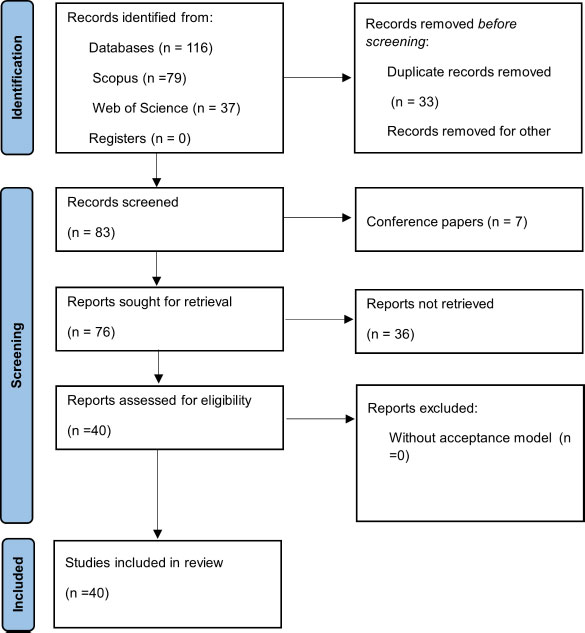
PRISMA flowchart.
The selection of Scopus and Web of Science as the sole databases for this systematic review was guided by their recognized academic rigor, extensive interdisciplinary coverage, and complementary indexing of high-impact peer-reviewed journals. Together, these databases provide broad international representation and ensure access to empirically robust studies relevant to research on car adoption and purchase intention. Their use minimizes the inclusion of non-indexed or low-quality sources, strengthens the reliability of the evidence base, and supports the transparency and reproducibility of the review in accordance with PRISMA 2020 guidelines. In addition, all figures included in this manuscript are cited sequentially in the text to ensure coherence and compliance with editorial standards.
In the initial identification phase, a comprehensive search strategy was implemented across the selected databases, yielding a substantial number of records. Duplicate entries were removed prior to screening to ensure accuracy. Three exclusion stages were then applied according to the predefined eligibility criteria, further refining the selection of relevant studies. After completing this process, 40 articles were retained for inclusion in the present systematic review on car adoption.
3. RESULTS
In accordance with the PRISMA 2020 guidelines, the present systematic review summarizes the studies included in Table 1. This table presents the articles retained after identification, screening, and eligibility, following the three exclusion phases described in the methodology.
| No | Title | Authors | Sample | Theory | Variables |
|---|---|---|---|---|---|
| 1 | Factors influencing consumers’ light commercial vehicle purchase intention in a developing country | [4] | 408 | Own model | Gender, age, monthly income, household size, driver's license type, fuel type, significant increase in monthly income, SRC-K license costs |
| 2 | Consideration of environmental factors in reflections on car purchases: Attitudinal, behavioural and sociodemographic predictors among a large UK sample | [5] | not specified | TPB | Intention to purchase: safer car |
| 3 | Motorized vehicle purchase in Surat, India | [6] | 128 | Own model | Price; fuel cost; seating capacity; engine size; income; inconvenience; negative image; careful spender |
| 4 | Effects of peer influence, satisfaction, and regret on Car Purchase Desire | [7] | 500 | Own model | Peer influence, satisfaction, regret, desire to purchase |
| 5 | Modelling social norms: Case study of students’ car purchase intentions | [8] | 1229 | Own model | Social norms, car purchase intention, attitudes, and socio-demographics |
| 6 | Effects of Chinese Firms’ Innovation on New Energy Vehicles Purchases | [9] | not specified | Own model | Innovation; purchase intention |
| 7 | Adoption of Electric Vehicles: Purchase Intentions and Consumer Behaviors Research in Turkey | [10] | not specified | TPB; TAM | Consumer innovativeness, perceived benefits, perceived risks, purchase intentions |
| 8 | Citizens’ electric vehicle purchase intentions in China: An analysis of micro-level and macro-level factors | [11] | 1080 | Own model | Social network, Age, Education, Financial subsidies, Charging stations |
| 9 | Electric car purchase price as a factor determining consumers’ choice and their views on incentives in Europe | [12] | not specified | Own model | Socioeconomic factors, Government incentives, Payment options, Depreciation |
| 10 | The influence of price fairness on customer satisfaction: An empirical test in the context of automobile purchases | [13] | 246 | Own model | Price perception, satisfaction, consumer vulnerability |
| 11 | The Impact of Car-Sharing on the Willingness to Postpone a Car Purchase: A Case Study in Hangzhou, China | [14] | not specified | Own model | Car ownership, willingness to postpone car purchase, and impact factors |
| 12 | Measuring the Value of Statistical Life in the USA by Means of Risk Assessment of Family Automobile Purchases | [15] | 4,036 | Own model | Mortality risk, purchase price, and fuel efficiency |
| 13 | Positive and negative spillover effects from electric car purchase to car use | [16] | 13,362 | TPB; Norm-Activation Theory | Attitudes, intentions, perceived behavioral control, personal norms, social norms, awareness of consequences, ascription of responsibility. |
| 14 | How important is vehicle safety in the new vehicle purchase/lease process for fleet vehicles? | [17] | 147 | Own model | Vehicle safety, purchase criteria, information sources |
| 15 | How important is vehicle safety in the new vehicle purchase process? | [18] | not specified | Own model | Importance of security, security features, purchasing strategies |
| 16 | Using an accelerated vehicle retirement program (AVRP) to support a mode shift: Car purchase and modal intentions following program participation | [19] | not specified | TPB | Attitudes, subjective norm, perceived behavioral control, intention |
| 17 | Consideration sets of size one: An empirical investigation of automobile purchases | [20] | 1,008 | Own model | Brand consideration, purchase decision |
| 18 | Value perception impact and countermeasures analysis of new energy vehicle purchase behavior based on consumer-level user review big data mining | [21] | 8529 | Own model | Economic level, personal risk, values, conditions of use, environmental awareness |
| 19 | Uncovering the behavioral determinants behind private car purchase intention during the new normal of COVID-19: An empirical investigation in China | [22] | 645 | PMT; PRT; TPB | Conditional value, pro-car-purchasing attitude, perceived behavioral control, health value, cost factors |
| 20 | Research on psychological attributions and intervention strategies of new energy hybrid vehicle purchase behavior | [23] | not specified | Rooting theory | Purchasing behavior |
| 21 | Experiences of past school travel modes by university students and their intention of future car purchase | [24] | not specified | Own model | Car purchase intention, School travel modes, Environmental factors |
| 22 | Revised CSI and Australian consumers: Incorporating ’innovation’ and ’automobile purchases.’ | [25] | 300 | TAM | Attitude, purchase intention, perceived usefulness, perceived ease of use |
| 23 | Influences of car type class and carbon dioxide emission levels on purchases of new cars: A retrospective analysis of car purchases in Norway | [26] | 198 | CADM | Car type class, CO2 emissions, socio-demographic factors, psychological factors |
| 24 | Hybrid car purchase intentions: A cross-cultural analysis | [27] | 1866 | Own model | Information seeking, self-image congruence, social value |
| 25 | Indian Management Students’ Electric Car Purchase Intention | [28] | 436 | Own model | Environmental concerns, automotive design, social norms, government policy, charging convenience, and driving convenience. |
| 26 | The effect of brand equity components on automobile purchase intention of consumers in Ho Chi Minh City, Vietnam | [29] | not specified | Own model | Brand awareness, self-expression value, perceived quality, brand psychology, brand loyalty, purchase intention |
| 27 | Item Analysis in Affect Measurement on the Decision to Purchase a Car using the Rasch Model | [30] | 82 | Own model | Affective responses, decision satisfaction, reliability |
| 28 | The Antecedents of Consumer Eco-Friendly Vehicles Purchase Behavior in the United Arab Emirates: The Roles of Perception, Personality, Innovativeness, and Sustainability | [31] | not specified | TPB; TAM | Attitude, subjective norms, perceived behavioral control, perceived usefulness, perceived ease of use |
| 29 | An exploration of electric vehicle purchase intention | [32] | 322 | TPB; UTAUT | EV product knowledge, Environmental concern, Perceived behavioral control, Perceived innovativeness, EV purchase intention, Age (moderator) |
| 30 | Determinants of Electric Cars Purchase Intention in Poland: Personal Attitudes v. Economic Arguments | [33] | 198 | Own model | Personal values, beliefs, EV features, previous experience |
| 31 | Low-cost green car purchase intention: Measuring the role of brand image on perceived price and quality | [34] | 200 | Own model | Brand image, perceived price, perceived quality, purchase intention |
| 32 | The relationship between RHA use and car purchases: Trends emerging in Bangkok, Thailand | [35] | 444 | Own model | Age, income, education, family structure, residence, car purchase intention, RHA use |
| 33 | The influences of incentive policy perceptions and consumer social attributes on battery electric vehicle purchase intentions | [36] | 261 | Own model | Environmental concerns, social norms, face consciousness, attitudes towards BEVs, purchase intentions |
| 34 | Research on Electric Vehicle Purchase and Sale Information Management System | [37] | not specified | TPB; SOR | Perceived value, purchase intention, perceived behavioral control, subjective norms |
| 35 | Satisfaction with current commuting expense as related to the relative fuel efficiency of a desired car purchase | [38] | 133 | Own model | Fuel efficiency, satisfaction with transportation costs, socioeconomic characteristics |
| 36 | Country image, informational influence, collectivism/individualism, and brand loyalty: exploring the automobile purchase patterns of Chinese Americans | [39] | 150 | Own model | Country image, informational influence, collectivism/individualism, brand loyalty |
| 37 | An empirical study on consumer automobile purchase intentions influenced by the COVID-19 outbreak | [40] | 960 | Own model | Gender, Age, Household income, Residential location, Vehicle availability, Driver's license, Local severity of the epidemic, Impact on income, Perceived severity, Perceived vulnerability |
| 38 | Influencing factor analysis of household electric vehicle purchase intention of HaiNan Free Trade Port under the background of a low-carbon lifestyle | [41] | 307 | TPB; Own theory | Risk perception, value perception, mental pressure, and self-control |
| 39 | Determinants and policy implications of residents’ new energy vehicle purchases: the evidence from China | [42] | not specified | TPB | Purchase intentions: perceived behavioral control |
| 40 | Car Purchase Intention Modeling in the Context of COVID-19: An Integrated Analysis of Impact Range and Impact Asymmetry | [43] | 1 | Own model | Purchase intention; Psychological factors; Impact of COVID-19 |
As shown in Table 2, the data collection instruments used in the reviewed studies were identified and classified. Questionnaires and surveys were the predominant tools for collecting information on vehicle adoption. These instruments are central to understanding the methodological approaches employed in this field and provide a concise overview of current research practices.
Similarly, the geographic contexts in which different populations have been studied to understand car adoption are illustrated in Fig. (2). As the figure shows, research is heavily concentrated in America and Asia, revealing a significant geographic gap, as regions such as Africa and Latin America remain underexplored. In America, studies have primarily focused on the United States, while in Asia, research has been conducted in countries such as China, India, Indonesia, and Thailand. Although this distribution highlights the topic's relevance in major automotive markets, it also underscores the need for broader geographic diversification to gain a more global understanding of car adoption.
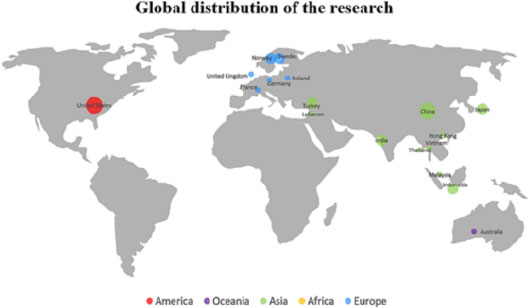
Geographic context of car adoption.
In addition to offering a geographic analysis, the study provides context on the types of populations that various authors have focused their studies on to understand the factors determining car adoption, as illustrated in Fig. (3). The primary populations studied in this area include car buyers, electric vehicle consumers, drivers, and college students. This reflects the diversity of approaches and segments analyzed in the existing literature.
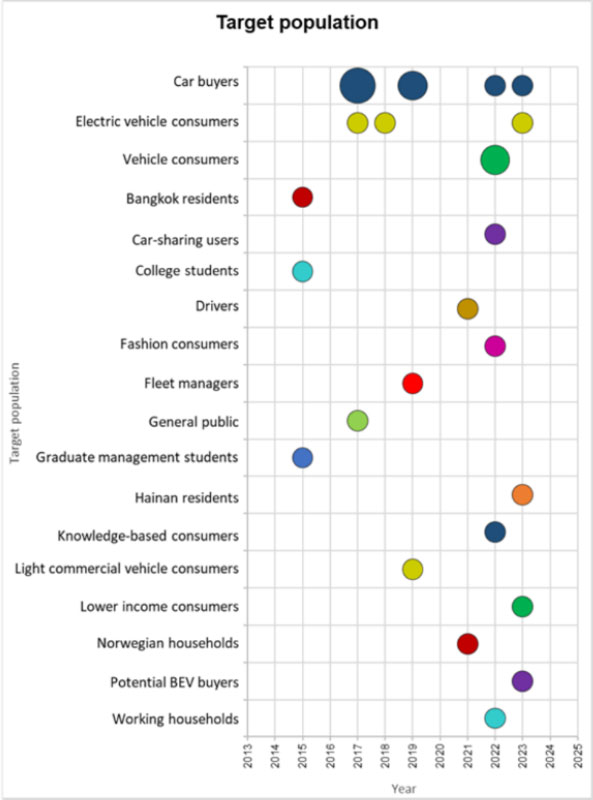
Target population in car adoption.
Figure 4 provides a detailed overview of the psychological and behavioral theories and models used to explain the determinants of car adoption. A substantial number of studies rely on “own models,” that is, customized analytical frameworks developed by the authors rather than standardized theories. These models typically integrate context-specific variables, such as price perception, innovation attributes, environmental concerns, and consumer satisfaction, to explain car adoption.
Alongside these customized approaches, established theories such as the Theory of Planned Behavior (TPB), the Technology Acceptance Model (TAM), and the Protective Motivation Theory (PMT) are also frequently cited in the literature. Together, these patterns demonstrate both the prevalence of context-tailored modelling and the theoretical diversity characterizing this field of study.
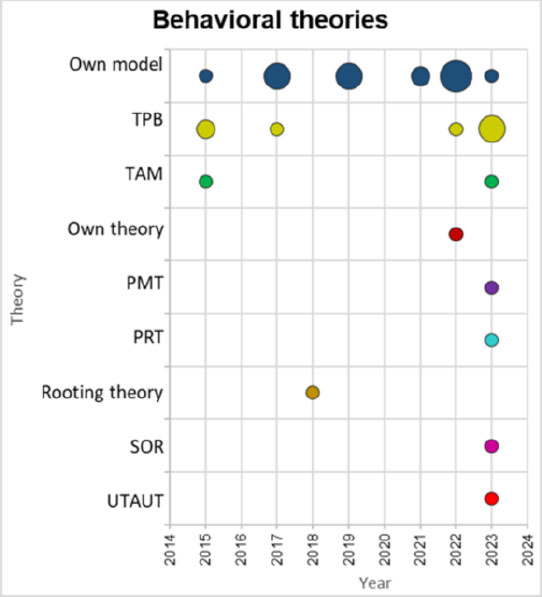
Theories identified for automobile adoption.
The principal latent variables were identified, as illustrated in Fig. (5), and encompass the factors or constructs adopted by various authors to understand car adoption, with due consideration for their respective geographic contexts and pre-established populations. Among the variables analyzed, the most notable are intention to purchase a car, age, perceived behavioural control, attitude, social norms, education, and gender. These factors highlight the most influential aspects in the studies reviewed.
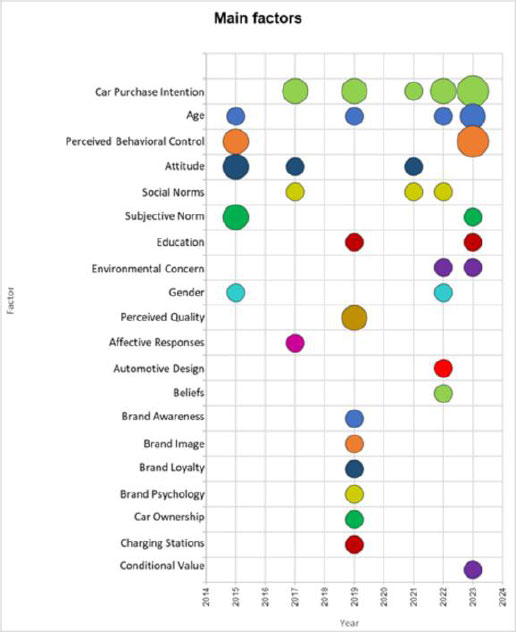
Main variables of car adoption.
4. DISCUSSION
This discussion section provides an integrated analysis of the research results and interprets the main findings in relation to the existing literature. The theoretical and practical implications derived from the review are presented, along with the main limitations of the study. In addition, remaining research gaps are highlighted, and a future research agenda is proposed. Finally, a theoretical model of car adoption is introduced based on the principal theories and variables identified in the selected studies.
4.1. Analysis of Data Collection Instruments
In the results section, it has been observed that the primary data collection instruments employed in research on car adoption have been questionnaires and surveys. Notable among the studies employing questionnaires is the work of Durmus Senyapar et al. [10] which undertook an in-depth investigation of consumer purchase intentions and behaviors regarding electric vehicles in Turkey. Published in Sage Open, this study has become a significant reference point due to its comprehensive approach and the methodological rigor of the questionnaire used to ascertain consumer attitudes and perceptions toward electric vehicles.
Moreover, the selection of questionnaires as the primary data collection instrument is supported by their ability to elicit a comprehensive range of responses regarding purchase intentions and consumer behavior. The work of Durmus Senyapar et al. [10] provides evidence of the effectiveness of questionnaires in obtaining meaningful quantitative data, thus offering a valuable model for future studies in the field of car adoption.
4.2. Analysis of the Geographical Context of Car Adoption
In the results section, it has been identified that the American continent, particularly the United States, has been a prominent context for research on automobile adoption. A representative study in this country is Wu's [41], which explored automobile purchasing patterns among Chinese Americans. His research, published in the Journal of Consumer Marketing, analyzed how country image, informational influence, and dimensions of collectivism and individualism affect loyalty to automotive brands and purchase decisions in this specific segment.
In Asia, research has been conducted in several key countries. In China, Wang and Dong [38] conducted a study on the determinants of new energy vehicle purchases, providing crucial evidence on policy implications. These included the need to establish government incentives to encourage EV adoption, such as subsidies and tax breaks, the importance of developing adequate infrastructure, such as charging stations, and implementing regulations that promote environmental sustainability and reduce dependence on fossil fuels. Additionally, the factors influencing EV adoption in China were identified [44].
Their work, published in Natural Hazards, offers a comprehensive understanding of purchasing behaviors and policies necessary to encourage the adoption of clean technologies that minimize or eliminate the adverse environmental impact associated with the utilization of fossil fuels. These technologies facilitate the reduction of greenhouse gas emissions and air pollutants, thereby contributing to environmental sustainability [45-47].
Conversely, in India, Pailwar and Srinivasan [28] examined the intention to purchase electric vehicles among management students, elucidating the motivations and impediments perceived by this demographic [48]. In Indonesia, Rejeki, Sulasmi, and Suryani [49] employed the Rasch model to analyze the impact of emotions on car purchase decisions, offering an additional perspective on the factors influencing car adoption in that context [49]. These studies highlight the necessity of considering geographical and cultural variables when investigating car adoption on a global scale. Car dependence itself has also been studied as a multidimensional phenomenon, requiring more holistic approaches that consider accessibility and perceptions, rather than focusing solely on demand factors.
4.3. Analysis of the Target Population in the Adoption of Automobiles
As noted in the results, research on car adoption has predominantly focused on countries such as the United States, China, India, and Indonesia and has examined different consumer populations. Among prospective vehicle buyers, Durmus Senyapar et al. [10] conducted a study in Turkey that explored purchase intentions and consumer behavior regarding electric vehicles. Their findings, published in Sage Open, provide insight into the motivations and determinants influencing the decision to acquire an electric car.
In a related line of inquiry, Anjam et al. [31] analyzed factors shaping the adoption of green vehicles in the United Arab Emirates. Green vehicles were defined as those with a lower environmental impact throughout their life cycle when compared to conventional automobiles. The study identified three key determinants: perception, innovative personality, and sustainability. Published in the International Journal of Economics & Management, this research expands current understanding by examining adoption drivers in a distinct regional context [31].
Finally, the effects of an accelerated vehicle retirement program on purchase intentions and modal shift among drivers was investigated. Published in the Journal of Transport and Land Use, this study illustrates the potential of public policy interventions to shape consumer decisions about automobile purchasing.
In a study of college students, Muromachi [24] examined the influence of prior experiences with school transportation modes on future intentions to purchase cars within this demographic. Published in Transportation Research Part A: Policy and Practice, the study provides insight into how early mobility experiences shape later car purchase decisions. Together, these studies illustrate the diversity of the populations studied and the varied approaches used to understand car adoption across contexts. Finally, beyond structural and economic variables, personal motives-including symbolic and environmental considerations-play a decisive role in car ownership and use, directly connecting to purchase intentions [45].
4.4. Analysis of Psychometric Theories in Car Adoption
As shown in the results, the principal theories employed to explain automobile adoption include proprietary models and well-established frameworks such as the Theory of Planned Behavior (TPB), the Technology Acceptance Model (TAM), and the Protection Motivation Theory (PMT).
Regarding proprietary approaches, Lv and Liu [30] examined the influence of value perception on the purchase of new energy vehicles using a data-mining analysis of user reviews. Published in MATEC Web of Conferences, this study represents a clear example of how bespoke models can be used to explore automobile adoption beyond traditional behavioral frameworks.
With respect to TPB, Shanmugavel and Alagappan [40] analyzed intention to purchase electric vehicles using this theory, identifying the attitudinal and normative components that shape consumer decision-making. Their findings, published in the International Journal of Electric and Hybrid Vehicles, underscore the continued relevance of TPB in car adoption research.
Similarly, Nayeem [34] applied the Technology Acceptance Model (TAM) to investigate car purchases in Australia, providing novel insights into consumer behavior in this context. Published in The International Review of Retail, Distribution and Consumer Research, this study demonstrates the utility of TAM in understanding technology acceptance within automobile markets.
Finally, Mao et al. [22] used the Protection Motivation Theory (PMT) to assess determinants of private car purchasing during the COVID-19 pandemic in China. Published in Mathematical Biosciences and Engineering, the study shows how health concerns and perceived personal safety influence consumer preferences for private car ownership as a protective measure against virus exposure.
Together, these studies demonstrate the versatility of psychometric theories in automobile adoption research and highlight the value of theoretical pluralism for understanding the complexity of car purchasing behavior.
4.5. Analysis of the Main Variables of Automobile Adoption
The results indicate that several latent variables strongly influence automobile adoption, including purchase intention, age, perceived behavioral control, attitude, social norms, education, and gender. Regarding purchase intention, Thaithatkul et al. [35] examined the relationshs among ridesharing and car-hailing app usage, car purchasing, and emerging mobility trends in Bangkok.
Age has also been identified as a relevant predictor. Shanmugavel and Alagappa [32] demonstrated that age significantly affects the intention to purchase electric vehicles, underscoring generational differences in the adoption of new transportation technologies. Perceived behavioral control was highlighted in the study by Wang et al. [37], who analyzed an information management system for the purchase and sale of electric vehicles and showed that perceived control over the purchase process plays a substantial role in adoption decisions.
Attitudes toward electric and hybrid vehicles constitute another key variable. Wang, Cao, and Zhang [36] found that perceptions of incentive policies and social attributes determine the intention to purchase battery electric vehicles. Evidence from China further demonstrates that consumers’ value orientations are strong predictors of willingness to purchase new energy vehicles [46], reinforcing the importance of personal beliefs in sustainable mobility adoption.
Social norms also emerge as influential factors. Belgiawan et al. [8] modeled car purchase intentions among students, demonstrating the impact of peer influence on purchase decisions. Educational factors have been explored by Habich-Sobiegalla, Kostka, and Anzinger [11], who examined micro- and macro-level educational variables in determining intentions to purchase electric vehicles in China. Finally, Yan et al. [40] showed that gender became a relevant determinant of purchasing behavior during the COVID-19 pandemic, illustrating how contextual conditions can modify traditional demographic effects.
Taken together, these studies show that automobile adoption is shaped by a multidimensional set of latent variables in which psychological, demographic, and contextual factors interact. Understanding these interactions is essential for explaining purchase behavior and designing interventions that promote the adoption of sustainable transportation technologies.
4.6. Main Research Gaps
Table 3 presents the principal research gaps that require attention in future studies. These gaps were identified through a comprehensive analysis of the reviewed literature and can be grouped into three main categories.
| Category | Gaps Identified | Justification | Questions for Future Research |
|---|---|---|---|
| Geographical | 1. Lack of studies in Africa and Latin America. | Most studies focus on specific regions, excluding areas with different socioeconomic contexts. | How do socioeconomic and cultural factors influence car adoption in Africa and Latin America? |
| 2. Limited research in regions of Eastern Europe and South Asia. | These regions present unique characteristics that could affect car adoption differently. | What specific factors affect automobile adoption in Eastern Europe and South Asia? | |
| Theoretical | 1. Little exploration of emerging theories, such as the Theory of Diffusion of Innovations. | Less conventional theories could provide new insights into car adoption. | How could the Diffusion of Innovations Theory explain the adoption of automobiles in recent contexts? |
| 2. Limited application of behavioral and psychometric models. | The integration of less traditional models could enrich the analysis of determining factors. | What contributions can psychometric models make to understanding car adoption? | |
| Variables | 1. Lack of consideration of perceived environmental impact. | Concern for the environment can significantly influence car purchasing decisions. | What is the impact of perceived environmental impact on car purchase intention? |
| 2. Insufficient analysis of the availability of infrastructure for electric vehicles. | Infrastructure can be a crucial factor in the adoption of electric vehicles, yet it is often overlooked in studies. | How does charging infrastructure availability impact EV adoption? | |
| 3. Limited assessment of the influence of specific government policies. | Government policies can have a major impact on car adoption, but their influence is not always fully assessed. | What effect do specific government policies have on car adoption in different countries? |
4.6.1. Geographical Gaps
Most studies on car adoption have concentrated on a limited set of regions, particularly the United States, China, India, and Indonesia, while other areas-especially in Africa and Latin America-remain underrepresented. This lack of geographic coverage restricts the generalizability of findings and limits understanding of contextual and cultural factors that may shape car adoption.
4.6.2. Theoretical Gaps
Although established theories such as the Technology Acceptance Model (TAM), the Theory of Planned Behavior (TPB), and the Protection Motivation Theory (PMT) have been widely applied, few studies have examined alternative theoretical frameworks. The incorporation of emerging or less conventional theories could offer new perspectives and deepen knowledge of adoption determinants. Potential frameworks include: the Diffusion Of Innovations theory (DOI), which explains how new technologies spread; Transaction Cost Theory (TCT), which considers the costs related to purchasing and maintaining vehicles; the Theory of Interpersonal Behavior (TIB), which explores attitudes, norms, and emotions in behavioral decision-making; and Social Capital Theory, which examines how networks and peer influence shape purchase decisions.
4.6.3. Variable Gaps
While several latent variables have been identified as relevant to automobile adoption-such as purchase intention, age, perceived behavioral control, attitude, social norms, education, and gender-additional factors warrant examination in future research. Variables such as perceived environmental impact, availability of electric vehicle infrastructure, and the influence of specific government policies could provide a more complete understanding of the determinants of adoption. Incorporating these variables would allow researchers to capture contextual and structural influences that extend beyond individual psychological factors.
Below is a table summarizing the identified gaps, their justification, and research questions to address them.
4.7. Theoretical Implications
The theoretical implications derived from this systematic literature review on car adoption, conducted under PRISMA 2020 guidelines, are diverse and relevant for advancing knowledge in the field. First, the examination of data-collection instruments shows that questionnaires and surveys remain the predominant methods, suggesting continued reliance on self-report techniques to capture consumer perceptions and behaviors.
Green purchase intention has been extensively analyzed through psychobehavioral theories, confirming the importance of attitudes, subjective norms, and perceived behavioral control in shaping sustainable consumer behavior [47]. This trend highlights the need to develop robust, valid measurement instruments across diverse cultural and geographical contexts, as well as to explore novel data-collection strategies for underrepresented populations.
Second, the geographical distribution of the reviewed studies shows a concentration in the United States, China, India, and Indonesia. This pattern indicates important gaps in other regions, such as Europe, Africa, and Latin America, where car adoption may be influenced by distinct sociocultural and economic conditions. Addressing these gaps would contribute to a more comprehensive and globally representative understanding of automobile adoption.
The review also underscores the diversity of target populations investigated, including car buyers, electric vehicle consumers, drivers, and college students. Each of these groups exhibits distinct characteristics and motivations, underscoring the importance of accounting for consumer heterogeneity in theoretical models. Differentiating between population segments would enable more precise explanations of adoption behavior and clarify which factors exert the strongest influence in each context.
Finally, the synthesis of the principal theories employed-such as the Theory of Planned Behavior (TPB), the Technology Acceptance Model (TAM), and the Protection Motivation Theory (PMT)-provides a solid conceptual foundation for future research. At the same time, the limited use of alternative frameworks suggests the need to incorporate less conventional theoretical perspectives that may capture additional dimensions of the adoption process. Broadening the theoretical scope could foster new insights into the complexity and multidimensionality of automobile adoption.
4.8. Practical Implications
The practical implications of this systematic literature review, conducted in accordance with PRISMA 2020 guidelines, are relevant for both researchers and decision-makers in the field of mobility and transport. First, identifying questionnaires and surveys as the predominant data-collection instruments provides a foundation for designing future market studies. For researchers, this suggests prioritizing the validation and cultural adaptation of these instruments in different regions.
For policymakers, understanding the techniques used to capture consumer perceptions can support the development of more effective public policies and marketing strategies grounded in reliable, up-to-date behavioral data. Insights from marketing research also indicate that “masstige” strategies-bringing premium products closer to mass consumers-may help shape perceptions of accessibility and adoption of electric vehicles [48].
Given the studies' geographical context, which has demonstrated a concentration in America and Asia, it is evident that there is an urgent need to expand the research to other regions, including Europe, Africa, and Latin America. Such geographical expansion would facilitate a more comprehensive understanding of the ways in which socioeconomic and cultural factors shape car adoption.
The geographic concentration of studies in North America and Asia underscores the need to expand research to other regions, including Europe, Africa, and Latin America. Broadening the geographic scope would facilitate a deeper understanding of how socioeconomic and cultural conditions shape automobile adoption. Decision-makers and automotive companies should therefore consider regional differences when designing market interventions, communication strategies, and incentive policies. The growing influence of social media and digital opinion leaders on sustainable mobility and EV adoption should also be taken into account [49].
Finally, the diversity of target populations investigated-such as car buyers, electric vehicle consumers, drivers, and college students-suggests that segmentation is essential for designing effective adoption strategies. For researchers, this underscores the need for further studies examining the motivations and characteristics of different consumer groups. For practitioners, tailoring awareness campaigns, educational programs, and incentives to specific population segments can enhance adoption outcomes and support the transition toward more sustainable transportation systems.
Insights from sustainable packaging research demonstrate that eco-friendly cues and design features can significantly influence consumer preferences, a lesson that may be transferable to the promotion of electric vehicles.
The review also underscores the relevance of theoretical models in explaining car adoption, including proprietary approaches, the Theory of Planned Behavior (TPB), the Technology Acceptance Model (TAM), and Protection Motivation Theory (PMT). This suggests that researchers should explore new theoretical perspectives and methodological approaches to address current shortcomings. For practitioners, applying a range of theoretical models can support the development of more robust, multifaceted strategies to promote car adoption by incorporating psychological, behavioral, and contextual considerations into decision-making.
The practical implications of this systematic review are multifaceted and span different sectors and contexts. The findings provide guidance for academics, automotive companies, and policymakers. First, the review highlights the prominence of questionnaires and surveys as primary data collection instruments in car adoption studies. These tools have proven effective in capturing consumer intentions and behaviors, enabling researchers and marketing professionals to design strategies that are more precise and responsive to market needs. Automotive firms could benefit from developing survey instruments that examine consumer motivations and perceived barriers in detail, thereby supporting more targeted and persuasive marketing campaigns.
Furthermore, identifying the geographic contexts in which automobile adoption has been studied offers useful guidance for companies seeking to expand into new markets. The review shows that most studies have concentrated on North America and Asia, particularly in the United States, China, India, and Indonesia. This finding suggests that strategies and determinants of automobile adoption may vary significantly across regions. Decision-makers should therefore consider the specificities of culture, economics, and society when adapting market-entry and positioning strategies in emerging contexts.
The review also demonstrates that target populations include car buyers, electric vehicle (EV) consumers, drivers, and college students. The distinct characteristics and behaviors of each group should be taken into account when designing policies and marketing interventions. For instance, research on EV consumers highlights growing interest in sustainability, which may prompt policymakers to implement or strengthen incentives for electric vehicle purchases. Similarly, insights into college students’ purchasing intentions can help companies design tailored products and services, such as accessible financing options or advanced technological features.
In addition, the review identifies several research gaps in the existing literature. These gaps-such as the lack of studies in specific geographic regions and the limited application of emerging theoretical frameworks-offer opportunities for future research that may deepen understanding of car adoption. Collaboration between academics and industry practitioners could be particularly valuable for addressing these gaps, generating evidence-based solutions that respond to the needs of different markets and support more effective adoption strategies.
The findings of this review indicate that consumer preferences for electric and hybrid vehicles are strongly associated with sustainability considerations in the transport sector. By identifying factors such as environmental awareness, perceived behavioral control, and government incentives, the results highlight the potential of public policy interventions to foster cleaner mobility alternatives. Promoting the adoption of low-emission vehicles can reduce dependence on fossil fuels and contribute to mitigating greenhouse gas emissions, thereby aligning transport strategies with global climate objectives.
At the same time, the results underscore the importance of social inclusion in the transition toward sustainable transport. Variables such as income level, access to charging infrastructure, and social norms suggest that sustainable mobility initiatives should not be limited to high-income populations. Policies including differentiated subsidies, accessible financing schemes, and the expansion of public charging networks can democratize access to new vehicle technologies. In this sense, the review provides evidence to support strategies that advance environmental sustainability while ensuring equity in mobility opportunities for diverse population groups.
4.9. Limitations
Despite adherence to PRISMA 2020 guidelines, this review is subject to several limitations. First, the search was limited to Scopus and Web of Science. While these databases ensure rigorous indexing and academic quality, relevant studies in other platforms or grey literature sources may have been excluded. This restriction may reduce the comprehensiveness of the review and limit the generalizability of its findings.
Second, Microsoft Excel® was used as a data classification and management tool. Although effective for organizing information, this software may constrain the ability to process larger data volumes or perform more sophisticated automated analyses. Future reviews could benefit from using specialized tools designed for systematic evidence mapping or bibliometric analysis.
Third, all articles were evaluated individually in full text. Although this approach supports careful assessment, it may introduce subjectivity into the interpretation of study quality and relevance. Moreover, the review focused primarily on data collection instruments, geographical contexts, theoretical approaches, and latent variables, without systematically comparing methodological differences across studies.
Finally, the reviewed literature was geographically concentrated in countries such as the United States, China, and India. Underrepresented regions-including Latin America, Africa, and Eastern Europe-may exhibit distinct economic, cultural, and infrastructural conditions influencing car adoption. The reliance on published journal articles indexed in major databases also raises the possibility of publication bias, as studies reporting significant results are more likely to be published and retrieved. Expanding the database scope and integrating grey literature could help mitigate these biases in future research.
Another limitation relates to the predominance of quantitative methodologies, particularly surveys and questionnaires, in the reviewed studies. While these instruments provide valuable statistical insights, they may overlook qualitative dimensions of consumer behavior, such as values, perceptions, and cultural narratives that influence car purchase intentions. This methodological bias could limit the depth of understanding and reduce the capacity to capture the complexity of consumer decision-making processes.
In line with this, none of the studies in the sample reported the combined use of quantitative and qualitative techniques. This absence suggests a methodological gap, as mixed-method approaches could offer a more comprehensive view of behavioral motivations and contextual factors involved in car adoption. Future research could therefore integrate qualitative interviews, focus groups, or narrative data to complement quantitative findings and improve explanatory depth.
A further limitation concerns potential publication bias. Because the search was limited to peer-reviewed articles indexed in Scopus and Web of Science, studies reporting statistically significant, positive, or theoretically expected results are more likely to be included, whereas non-significant or null findings may be underrepresented. This factor could affect the overall balance of the evidence synthesized in this review.
Finally, this review employed a title-only inclusion criterion during the initial screening stage. Although this approach increases precision by ensuring that selected studies explicitly address car adoption or purchase intention, it also carries the risk of excluding relevant contributions in which key concepts appear only in abstracts or keywords. Expanding screening criteria to include titles, abstracts, and keywords in future reviews may enhance the comprehensiveness and representativeness of the evidence base.
4.10. Agenda for Future Research
Future research should prioritize expanding the geographical scope of studies to include underexplored regions, particularly in Africa and Latin America, where socioeconomic, cultural, and infrastructural conditions differ markedly from those documented in North America and Asia. Broadening the geographical focus would enable a more comprehensive, globally representative understanding of the drivers and barriers to car adoption.
In terms of target populations, the existing literature has concentrated primarily on car buyers, Electric Vehicle (EV) consumers, drivers, and university students. However, groups such as transportation professionals, public transport users, and low-income populations remain underexplored. Investigating the perceptions and behaviors of these segments could yield valuable insights into adoption patterns, especially in contexts where mobility decisions are shaped by systemic constraints rather than individual preferences.
With respect to theoretical development, future research should move beyond dominant models such as the own model, TPB, TAM, and PMT and incorporate alternative perspectives that capture emerging determinants of mobility behavior. Promising avenues include models based on the Diffusion of Innovations, Social Capital Theory, the expanded Theory of Planned Behavior, and frameworks from sustainability science and consumer psychology. The application of these models could offer nuanced explanations for complex behavioral intentions, especially in contexts of technological transition.
Methodologically, mixed-method approaches represent a significant opportunity to enhance explanatory power. Incorporating qualitative techniques such as interviews, focus groups, ethnography, or narrative analysis alongside quantitative data would deepen the interpretation of consumer motivations and contextual factors influencing automobile adoption. Integrating these approaches would contribute to a more holistic and robust evidence base.
Finally, future research should incorporate new variables tied to contemporary mobility challenges, including climate change awareness, availability of charging infrastructure, perceptions of energy security, and the effectiveness of targeted government incentives. Examining these emerging factors could generate more actionable knowledge for designing policies that promote sustainable and inclusive transport systems.
Regarding the variables under investigation, while factors such as car purchase intention, age, perceived behavioral control, attitude, social norms, education, and gender have been addressed, several relevant determinants remain underexplored. Emerging variables such as perceptions of sustainability, climate change awareness, and environmental concern are likely to play an increasingly important role in adoption decisions. Examining the influence of these factors could yield valuable insights for the design of more effective marketing strategies and evidence-based public policies that promote low-emission vehicles.
Furthermore, future research should prioritize the use of mixed-method approaches that combine quantitative rigor with qualitative depth. Integrating large-scale surveys with qualitative interviews, focus groups, or narrative data would provide a more holistic understanding of the motivations, barriers, and contextual influences associated with car adoption. This methodological diversification would enable researchers to capture both measurable behavioral tendencies and the subjective dimensions underlying consumer decisions.
Finally, it is essential that future studies remain attuned to the rapid evolution of automotive technologies and sustainable mobility policy frameworks. Continuous developments in electric and hybrid vehicle systems, charging infrastructure, fiscal incentives, and environmental regulations have the potential to reshape adoption patterns. Keeping research aligned with these emerging trends will ensure that the findings remain relevant and applicable to contemporary transport planning and innovation strategies.
4.11. Main Model of Car Adoption
From the examination of the principal theoretical models and variables used to explain or predict automobile adoption, as illustrated in Fig. (6), a clear integration emerges between foundational behavioral theories and the determinants most frequently reported in the literature. The most influential theoretical models-namely, the Theory of Planned Behavior (TPB), the Technology Acceptance Model (TAM), and Protection Motivation Theory (PMT)-are systematically combined with key variables such as car purchase intention, age, perceived behavioral control, attitude, social norms, education, and gender. This integration provides a comprehensive analytical framework to assess the interactions among these variables and their effects on automobile adoption, offering deeper insight into the factors shaping consumer purchase decisions and technological preferences.
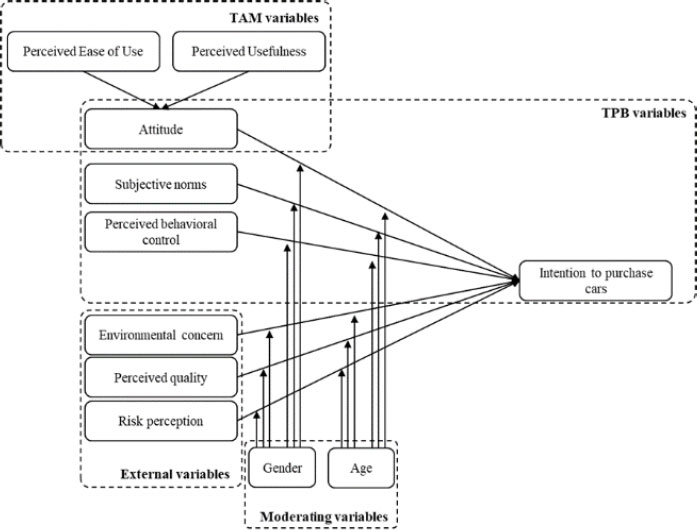
Proposed theoretical model on car adoption.
Based on the combination of theoretical constructs and empirical patterns identified in the literature, the following hypotheses may be formulated:
- H1: Attitude toward vehicle purchasing positively influences purchase intention.
- H2: Age exerts a significant effect on purchase intention.
- H3: Perceived behavioral control positively influences purchase intention.
- H4: Social norms positively influence purchase intention.
- H5: Higher levels of education are associated with a more favorable attitude toward vehicle purchasing.
- H6: Gender moderates the relationship between attitude and purchase intention.
- H7: The relationship between perceived behavioral control and purchase intention is mediated by attitude.
- H8: The interaction between education and gender influences purchase intention.
This model consolidates the most recurrent relationships reported in empirical studies and provides a structured foundation for future quantitative testing using structural equation modeling (SEM), partial least squares (PLS-SEM), or other causal analytic techniques commonly employed in adoption research.
The proposed model for understanding car adoption is grounded in the integration of the principal theoretical approaches identified in this systematic literature review. This conceptual model synthesizes elements of the own model with widely recognized frameworks, including the Theory of Planned Behavior (TPB), the Technology Acceptance Model (TAM), and Protection Motivation Theory (PMT). The objective is to provide a comprehensive explanation of the factors that influence automobile adoption by incorporating complementary psychological, technological, and motivational mechanisms.
In addition, the model incorporates key external variables consistently identified in the reviewed studies-namely, car purchase intention, age, perceived behavioral control, attitude, social norms, education, and gender. Including these variables enhances understanding of the determinants shaping car adoption and enables a more detailed examination of their interrelationships across different contexts and populations.
TPB provides the foundational structure for explaining intentional behavior through attitudes, subjective norms, and perceived behavioral control. TAM complements this framework by incorporating technology-specific beliefs, such as perceived usefulness and perceived ease of use, which are essential when evaluating vehicles equipped with advanced or sustainable technologies. PMT further expands the model by introducing cognitive appraisal processes related to risk perception, threat evaluation, and coping strategies, which are particularly relevant where environmental concerns, safety considerations, and fuel efficiency affect consumer decision-making.
Beyond these core constructs, additional variables-such as price perception, environmental concern, innovation attributes, and consumer satisfaction-interact with the theoretical foundations by shaping attitudes, influencing perceptions of usefulness and ease of use, and moderating threat and coping appraisals. Taken together, these elements enhance the explanatory power of the integrated model, enabling it to capture both general behavioral determinants and domain-specific factors that influence consumer decisions about car adoption.
CONCLUSION
Regarding data collection instruments, questionnaires and surveys emerge as the most commonly used tools in the reviewed studies. These instruments provide essential quantitative data for assessing purchase intentions and behaviors related to car acquisition, underscoring the importance of standardizing and validating survey instruments to enhance comparability across studies.
Regarding geographical coverage, research on car adoption has been predominantly conducted in the United States, India, China, and Indonesia. While this reflects the prominence of large automotive markets, it also underscores the need to investigate underexplored regions to obtain a more global and diverse understanding of the factors influencing car adoption.
In terms of target populations, most studies focus on car buyers, Electric Vehicle (EV) consumers, drivers, and college students. Although these groups offer valuable perspectives, there is clear potential for future research to incorporate additional population segments, which may provide further insights into consumer behavior in this domain.
Theoretical approaches commonly employed in car adoption research include the Theory of Planned Behavior (TPB), the Technology Acceptance Model (TAM), and Protection Motivation Theory (PMT). These models provide a solid foundation for explaining intentions and behaviors related to vehicle purchasing. However, the integration of additional theoretical frameworks could broaden understanding and address current conceptual limitations.
Key variables identified in the literature include car purchase intention, age, perceived behavioral control, attitude, social norms, education, and gender. These determinants are crucial for understanding motivations and barriers to car adoption, yet emerging variables-such as sustainability perception, environmental concern, and charging infrastructure availability-also warrant examination in increasingly dynamic mobility contexts.
Overall, both theoretical and practical implications highlight the need to consider a broader range of theories and variables to achieve a more comprehensive understanding of car adoption. These findings may help scholars develop more integrated conceptual models that address existing gaps. From a practical perspective, decision-makers should tailor marketing strategies and public policies to account for regional and demographic differences in consumer purchase intentions and behaviors.
The integrative framework proposed in this review offers a distinct contribution by unifying TPB, TAM, and PMT into a single structure that explains car adoption more holistically than any of the individual theories. This synthesis clarifies how behavioral, technological, and motivational mechanisms jointly shape consumer decisions, thereby providing a coherent foundation for future empirical inquiry.
Subsequent research may validate this model by testing its constructs through structural equation modeling, longitudinal designs, or cross-regional comparisons that capture variations in consumer behavior across different mobility ecosystems. Such empirical applications would not only assess the robustness and predictive power of the framework but also refine the interactions among its core and context-specific variables.
Moreover, by offering a comprehensive lens for understanding the determinants of automobile adoption, the model provides policymakers with valuable insights for promoting sustainable mobility, designing targeted incentive schemes, and developing communication strategies that address key consumer beliefs and concerns. This forward-looking perspective underscores the model’s relevance for both academic advancement and evidence-based policy development.
AUTHORS’ CONTRIBUTIONS
The authors confirm their contribution to the paper as follows: J.W.T.F.: Study conception and design; J.V.: Conceptualization; A.V.A.: Methodology; D.C.N.R.: Data collection; B.J.T., P.A.R.C.: Draft manuscript. All of the authors have reviewed the results and approved the final version of the manuscript.
LIST OF ABBREVIATIONS
| EV | = Electric Vehicle |
| AVRP | = Accelerated Vehicle Retirement Program |
| TPB | = Theory of Planned Behavior |
| TAM | = Technology Acceptance Model |
| PMT | = Protective Motivation Theory |
AVAILABILITY OF DATA AND MATERIALS
The data supporting the findings of the article is available in the Zenodo repository at https://doi.org/10.5281/zenodo.20215656, reference number 20215656.
ACKNOWLEDGEMENTS
Declared none.